











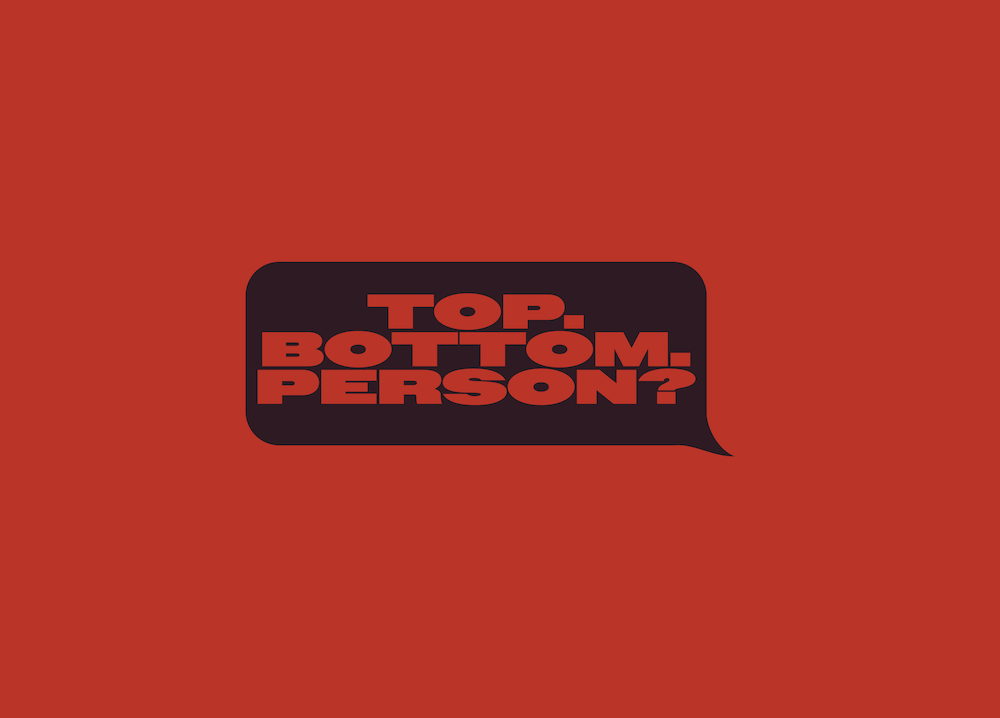
Top, Bottom, or Just a Person?
We turned a physical preference into a personality type. It’s time to drop the script.
In queer spaces, language moves fast. Sometimes we adopt labels so quickly we forget to check if they actually fit. Somewhere along the line, “top” and “bottom” stopped being simple descriptions of what we do in bed and started becoming shorthand for who we are as people.
We’ve turned a physical preference into a personality trait, and honestly? It’s exhausting.
The Logistics Got Complicated
At the most basic level, these terms are just logistics. A top prefers to penetrate; a bottom prefers to be penetrated; a vers person enjoys both. That’s the whole story — or at least it should be.
But we’ve let straight-world logic bleed into our bedrooms. We’ve inherited this old, dusty binary that says sex requires one “active” person and one “passive” person. Because society links activity with masculinity and receptivity with femininity, we’ve accidentally turned topping into “being the man” and bottoming into “being the woman.” It’s just a recycled version of the same gender roles we were supposed to be escaping.
And Then There Are Sides
Before we go any further: if the top/bottom binary already feels reductive, consider that it doesn’t even account for everyone in the room. Sides — gay and queer men who don’t engage in anal sex at all — exist in significant numbers, and the framework just… writes them out entirely.
Being a side isn’t a phase, a preference gap, or something to be fixed. It’s a complete sexual identity. But because the conversation is so locked into penetration as the definition of “real” gay sex, sides are constantly made to feel like they’re doing it wrong — too prudish, not gay enough, somehow incomplete.
That’s exactly the problem with the binary. It doesn’t just flatten nuance — it makes whole people invisible. The box isn’t big enough, and we keep acting like that’s the person’s fault for not fitting.
Power Isn’t Where You Think It Is
There is this persistent, annoying myth that the person doing the penetrating holds all the power. But anyone who’s actually had good sex knows that power isn’t about mechanics — it’s about presence.
A bottom can dictate the rhythm, the depth, and the entire emotional energy of an encounter. A top can be deeply submissive, responsive, gentle. Power lives in consent, communication, and trust. It isn’t assigned by position; it’s negotiated between two people. When we assume otherwise, we reduce human connection to a set of gears turning.
The Fragile Masculinity Trap
A lot of the hang-ups around these roles come from the fear that masculinity is something you can “lose.” We’re taught that it’s a prize to be guarded, and that being receptive somehow surrenders it.
But if your sense of self is so fragile that a sexual position can shatter it, the problem isn’t the sex — it’s the definition of masculinity you’re carrying. Your gender expression isn’t a performance that needs to be validated by a sexual act. You are who you are, regardless of which way you’re facing.
What We Lose When We Box Ourselves In
When we collapse our whole identity into a role, we stop showing up as ourselves and start performing a character. You’re not being a bottom — you’re playing one. And that performance costs something real.
It leads to fetishization — being seen as a category instead of a human. It creates erasure for people who are fluid, who feel pressured to pick a side and stay there. It builds emotional walls: tops feeling they have to be hard, bottoms feeling they have to be soft. None of that is intimacy. It’s theater.
A Better Way to Connect
Instead of leading with “What are you?” — which sounds more like an interrogation than a flirtation — try asking what actually feels good for someone. How they like to give and receive pleasure. What they’re in the mood for tonight. Questions that treat another person as a person, not a position.
Your pleasure doesn’t owe anyone a coherent story. You don’t have to prove your manliness, your womanhood, or your power through your sex life.
Queer liberation was never about just changing who we sleep with — it was about refusing to play the roles we were assigned. No scripts, no hierarchies. Just two people figuring it out as they go.
the homos have spoken. these are the hits.









Leave a comment
This site is protected by hCaptcha and the hCaptcha Privacy Policy and Terms of Service apply.